
58 published reviews
Read reviewsAir conditioning for homes
Home Air Conditioning Installation Across Scotland
Quiet, modern home air conditioning designed for bedrooms, living spaces, home offices and multi-room comfort—with cooling in summer and efficient heating when you need it.
- Comfortable bedrooms, living spaces and home offices
- Single-room or multi-room systems
- Clear controls, tidy installation and handover
No obligation. Tell us about the property and we’ll confirm the most useful next step.

Homes and businesses across ScotlandProperty-specific system designClear handover and aftercare
What to check in a home air conditioning quote
For a bedroom, ask where the airflow will go with the door shut and where the outdoor unit could be heard at night. A home office used mainly during the day may need a different position and operating schedule.
- The room and equipment covered, including where each unit would go.
- How pipework, condensate drainage and the electrical supply will be routed.
- What sound data applies at the proposed setting, especially for bedrooms.
- Whether the price includes access, making good, commissioning and showing you the controls.
Independent customer feedback
Independent feedback before you choose an installer
See public feedback for FLO Renewables Scotland, including air-conditioning and air-to-air installations, before discussing home air conditioning. Ratings and review counts can change as new feedback is published.
Check the current Trustpilot profile“Neat, methodical and conscientious.”
Air-to-air system customer · Edinburgh
“Friendly, professional, and left everything spotless.”
Air-conditioning customer · Glasgow
Designed for the property
A comfortable home without relying on portable units
A fixed air-conditioning system gives you far more control than opening windows or moving a portable unit from room to room. Modern systems can cool, heat, filter and dehumidify while operating quietly in the background.
The right result depends on good design. FLO Air Con assesses the rooms, glazing, occupancy and practical installation route before recommending a system. That means capacity and unit positions are selected for the property—not from a one-size-fits-all package.
Comfort you can live with
Designed to feel at home—not take over the room
Before equipment is chosen, we work out which rooms need comfort, how air can move through them and where the system can be installed neatly. That prevents a powerful unit in the wrong position from becoming the problem it was meant to solve.
- Identify the rooms that overheat and when
- Keep airflow comfortable around beds and seating
- Plan indoor, outdoor and pipework positions together
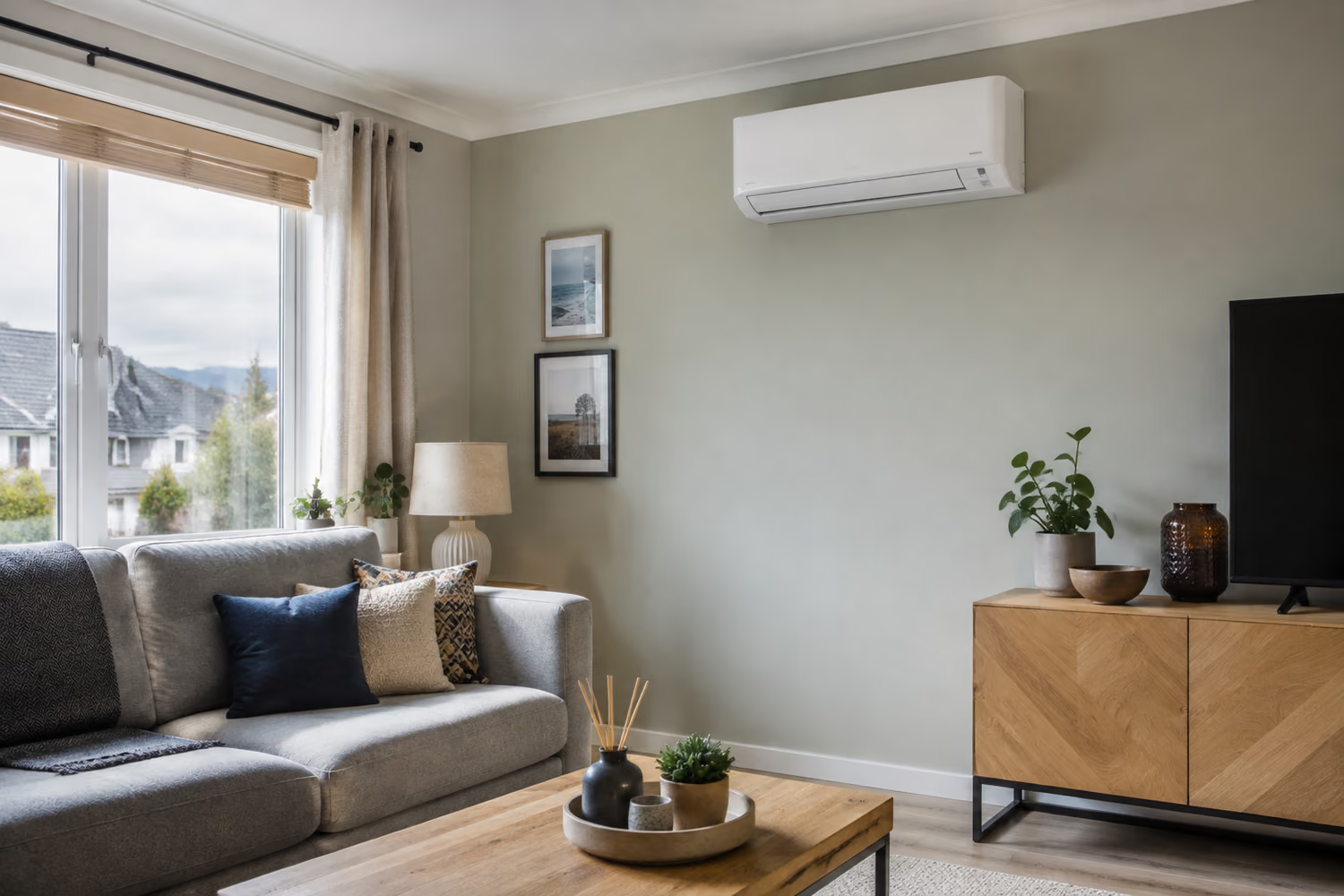
The indoor unit needs a clear air path, sensible controls and a position that works with the room rather than competing with it.
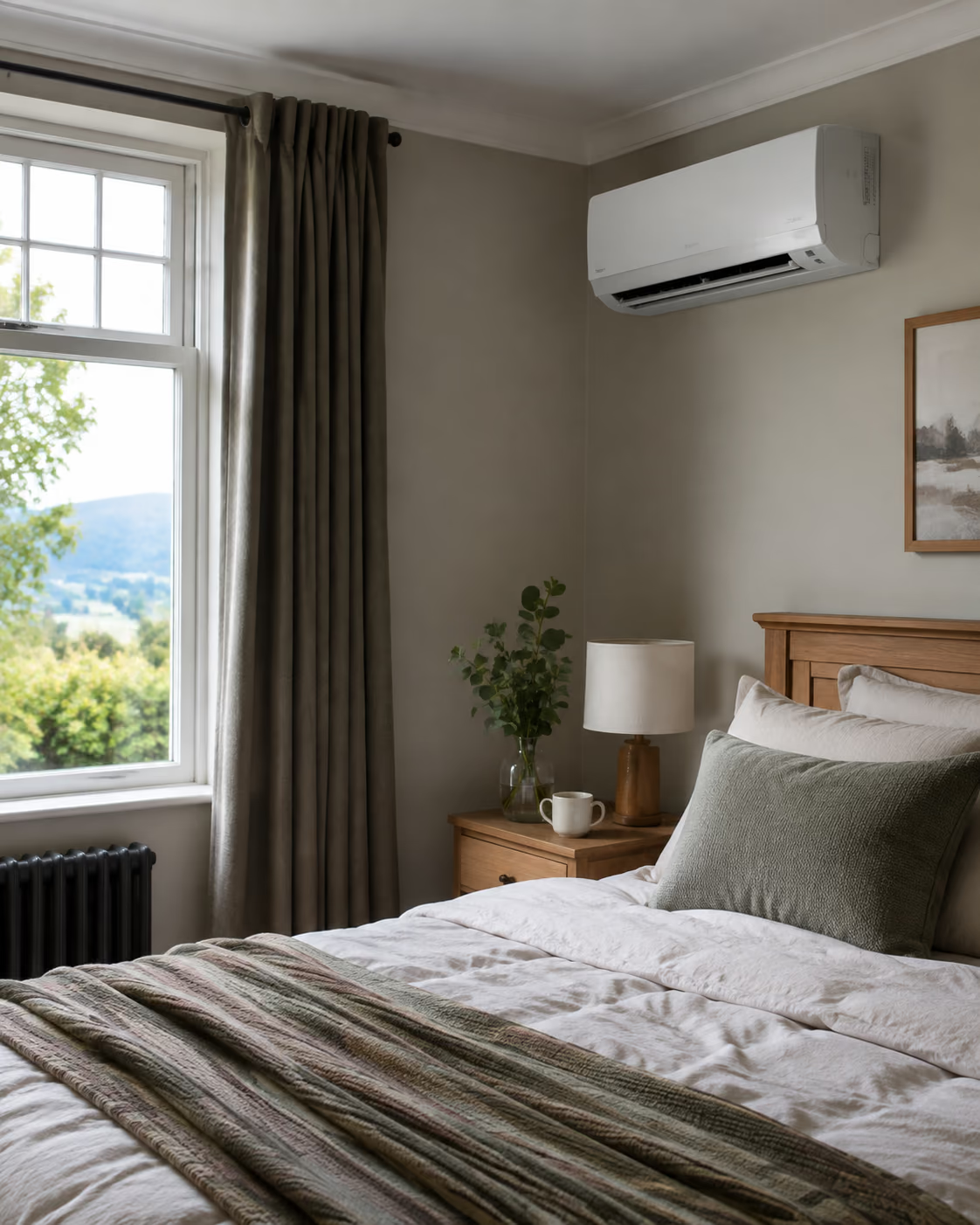
Low sound levels matter, but so do fan direction and placement away from the bed when the room is used overnight.
What changes for you
Judge the result by everyday comfort—not the equipment alone
Cooler sleep
Create a calmer, more consistent bedroom temperature during warm weather, with equipment selected for low-noise use.
Useful all year
Many modern systems operate as air-to-air heat pumps, providing responsive heating as well as cooling.
Room-by-room control
Condition the rooms you are using, with single-split and multi-split options to suit different layouts.
Choose your starting point
From one warm room to whole-home comfort
We will confirm system suitability, capacity, positioning and practical constraints before recommending equipment.
Bedrooms and loft rooms
Useful where heat builds up upstairs, rooflights increase solar gain or summer nights are uncomfortable.
Living spaces
Quiet, responsive comfort for the rooms where households spend most of their time.
Home offices
A more stable working temperature for garden rooms, converted rooms and dedicated offices.
Multi-room homes
One outdoor unit can serve compatible indoor units where the property and system design allow.
What determines your proposal
The six checks that turn an idea into a workable design
Room size is only one part of air-conditioning design. We look at the building and the way the space is used so the proposal is practical, clear and appropriately sized.
- Room size, glazing, orientation and likely heat gain
- How many people use the space and at what times
- Indoor unit positions, airflow and day-to-day comfort
- A practical, considerate route for pipework and cabling
- Outdoor-unit position, access, noise and condensate drainage
- Controls, zoning and how the system will be used through the year
Your route from question to working system
How a well-planned home air conditioning project moves forward
- 01
Describe the comfort problem
Tell us which rooms get too warm, when it happens and whether heating as well as cooling would be useful.
Your priorities - 02
Assess each room
Room size, glazing, orientation, occupancy and likely heat gain are reviewed together.
Room by room - 03
Compare system shapes
We explain the practical difference between a single-room system, several independent systems and multi-split.
Clear trade-offs - 04
Plan a tidy installation
Indoor positions, the outdoor unit, pipe routes, drainage and access are agreed before work starts.
Agreed scope - 05
Set up and hand over
The system is commissioned and you are shown controls, sensible settings, filter care and the maintenance route.
Ready to use
Helpful reading
Useful questions about home air conditioning
Compare the practical choices that affect comfort, equipment position, installation scope and long-term use before requesting a property-specific answer.
Bedroom comfort
Browse all ten air-conditioning guides What is the best air conditioning for a bedroom?
Read the guide Working from homeAir conditioning for home offices and garden rooms
Read the guide Sound and comfortHow quiet is home air conditioning?
Read the guideLocal service guides
Home air conditioning across our core areas
Explore location-specific guidance for this service, including local property context, practical constraints and nearby coverage.
GlasgowGlasgow and the westEdinburghEdinburgh and the LothiansPaisleyRenfrewshireEast KilbrideSouth LanarkshireStirlingStirling and the Forth ValleyRenfrewRenfrewshire · PA4JohnstoneRenfrewshire · PA5, PA6, PA9 and PA10HamiltonSouth Lanarkshire · ML3BlantyreSouth Lanarkshire · G72BearsdenEast Dunbartonshire · G61MilngavieEast Dunbartonshire · G62BishopbriggsEast Dunbartonshire · G64KirkintillochEast Dunbartonshire · G66FalkirkFalkirk and the Forth Valley · FK1, FK2DunblaneStirling · FK15Bridge of AllanStirling · FK9ClydebankWest Dunbartonshire · G81DumbartonWest Dunbartonshire · G82BallochWest Dunbartonshire · G83AlexandriaWest Dunbartonshire · G83CumbernauldNorth Lanarkshire · G67, G68
Useful answers
Air conditioning questions, answered
Need advice for your property? Call the team on 0800 043 1188.
Can home air conditioning heat as well as cool?
Many modern split systems are reversible air-to-air heat pumps. They can provide cooling in warm weather and responsive heating when temperatures fall. The proposed system and its seasonal efficiency should be confirmed for your property.
How quiet is domestic air conditioning?
Modern indoor units can operate very quietly, but sound levels vary by model and operating mode. Bedrooms need especially careful equipment selection, positioning and commissioning.
Do I need air conditioning in every room?
Not necessarily. Some homes begin with the rooms that overheat most, while others benefit from a planned multi-room system. A survey helps compare the options.
Where does the outdoor unit go?
The position depends on access, airflow, noise, pipework routes, drainage and any planning or property restrictions. FLO Air Con assesses these constraints before finalising the design.
Can air conditioning help with humidity?
Air conditioning removes moisture while cooling and can make humid rooms feel more comfortable. It is not a substitute for resolving damp, leaks or inadequate building ventilation.
Your next useful step
Ready for better year-round comfort?
Tell us about your home or business and we’ll help you understand the right air-conditioning route.