
“Quiet” is a design question, not one product number
Product literature normally publishes sound information for indoor and outdoor equipment, often across several operating modes. Those figures are useful for comparison, but the way a system sounds in a room also depends on fan speed, room acoustics, distance and what the listener is doing.
A sound that disappears into normal daytime activity may be more noticeable in a still bedroom at night. The intended room and operating pattern should therefore be part of equipment selection.
Indoor-unit sound changes with demand
The lowest published setting is not necessarily the setting the system will use while bringing a warm room back to temperature. Correct sizing helps the equipment deliver comfort without relying unnecessarily on its highest fan speed, but deliberate oversizing is not a shortcut to a quieter result.
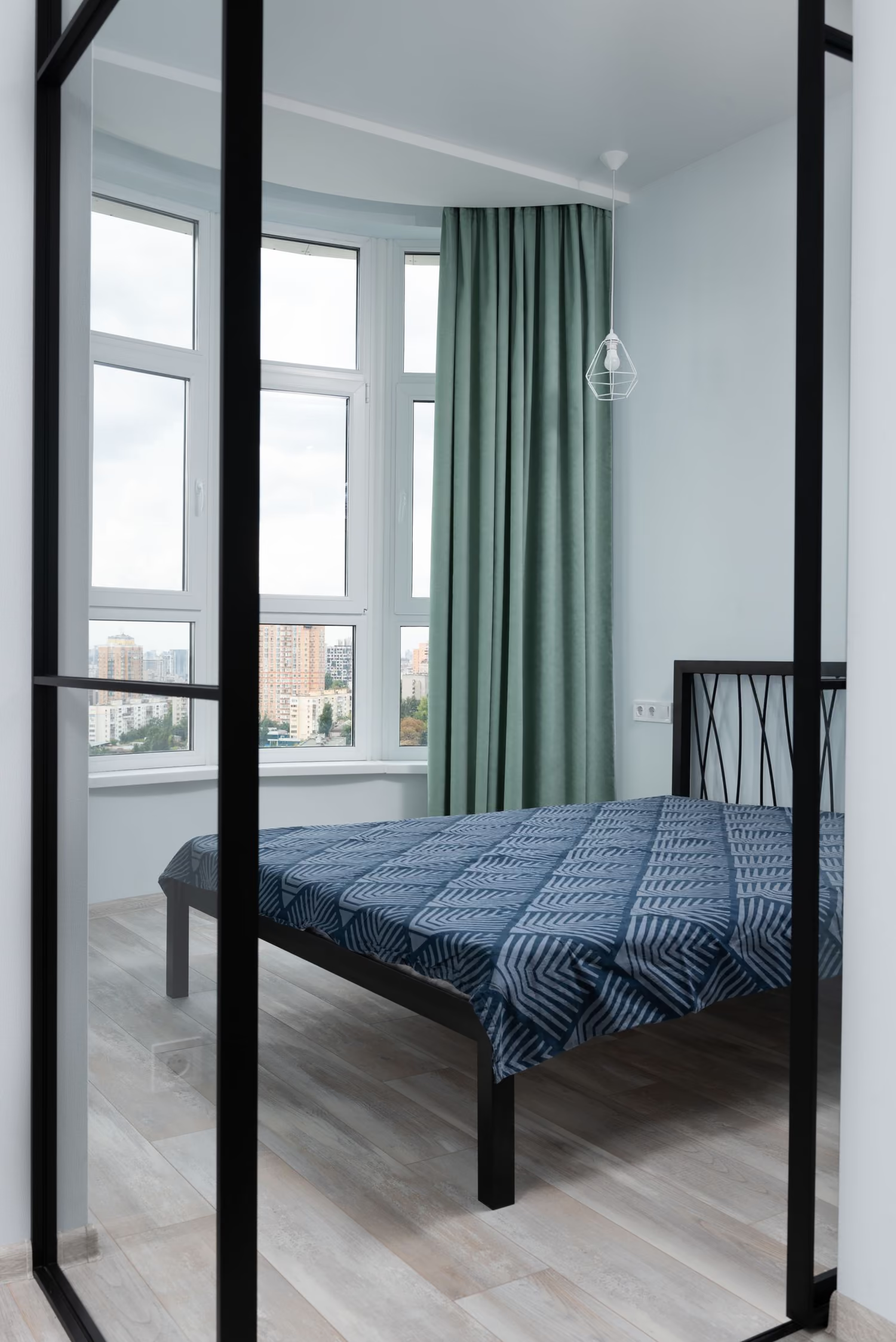
Air noise can also feel different when the discharge is directed at a person. For a sleeping space, combine product data with the bedroom guidance in choosing bedroom air conditioning.
Outdoor sound belongs in the survey
Outdoor units contain fans and compressors. Their position relative to bedroom windows, neighbours and reflective walls can affect how sound is perceived. Corners and narrow passages may behave differently from open locations, while brackets or bases need suitable vibration control.
The outdoor unit still needs free airflow and service access, so hiding it behind an enclosure without design approval is not a sensible noise solution. The guide to unit positioning explains the wider trade-offs.
Installation quality and condition make a difference
Loose panels, unsuitable mounting, debris, obstructed airflow or a developing mechanical fault can create sounds that are not part of normal operation. New rattling, grinding or repeated stopping and starting should be described when arranging support rather than treated as routine background noise.
Regular filter care and appropriate professional maintenance help keep the equipment working as intended. Read the servicing and maintenance guide for the difference between user care and a system service.
How to compare systems for a quiet room
Ask for indoor sound data across the available fan settings and the outdoor-unit information for the exact proposed model. Discuss where you sit or sleep, when the system will operate and whether neighbouring windows are close to the proposed outdoor position.
FLO’s domestic air-conditioning design starts with those property details rather than treating every quiet-room enquiry as the same package.
Air conditioning is mechanical equipment and is not silent. A good design aims for sound that is appropriate to the room, time of use and nearby properties, with the equipment operating in a sensible part of its range.